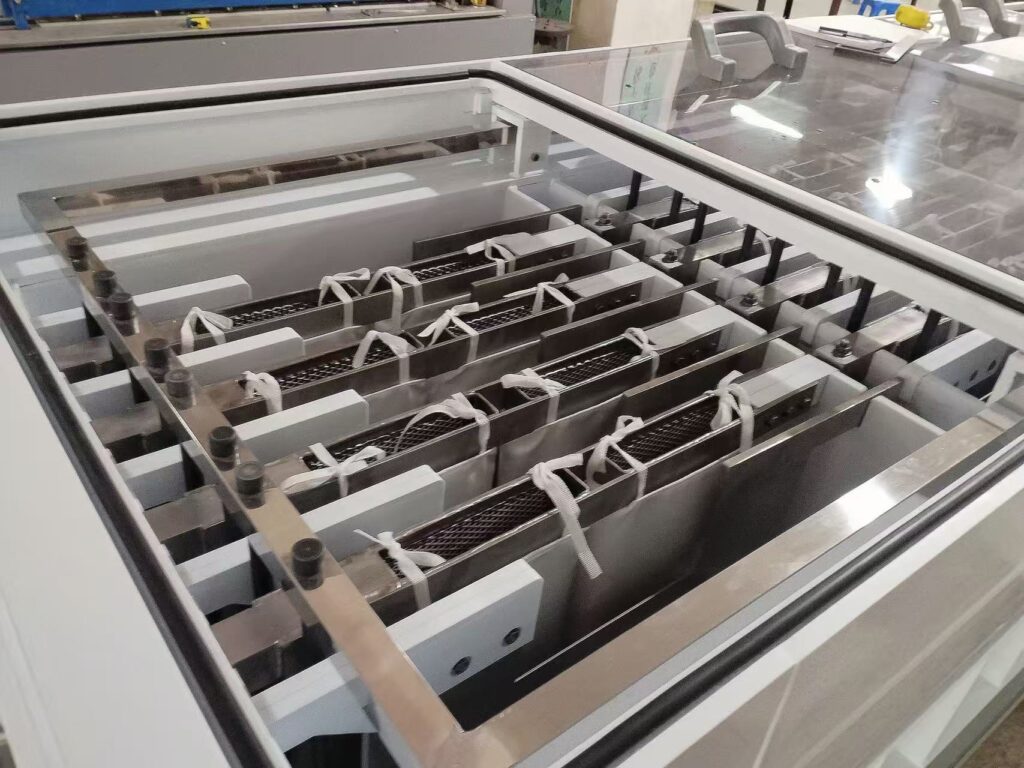

Electrolytic refining of silver is based on the differences in the standard electrode potentials of the various metals present in gold-silver alloys. In this process, an alloy plate serves as the anode, while a sheet of pure silver, stainless steel, or titanium acts as the cathode; an aqueous solution of nitric acid and silver nitrate is used as the electrolyte. When a direct current is passed through the electrolytic cell, pure silver is deposited at the cathode, while impurity metals—with electrode potentials either more positive or more negative than that of silver—either enter the anode slime or dissolve into the electrolyte. This method enables the purification of silver and the recovery of gold, platinum, and palladium.
The horizontal-plate, automatic silver-powder-discharge electrolytic cell system comprises key equipment such as the electrolytic cell, rectifier, silver powder conveyor belt, cathode suspension rack, and speed reducer. This silver electrolytic refining process departs from the traditional model—which utilizes smaller plates and lower current density—by increasing the anode weight from 12 kg to 45 kg and raising the current density from 300 A/m² to 500–700 A/m². Compared to the traditional method, this process offers several advantages, including a shorter production cycle, a faster turnover rate for electrolytic silver powder, a reduction in the volume of electrolyte held in the system, and higher current efficiency.
If you are interested in our company machine, welcome to contact us for more details.
my whatsapp: +8618924589429